City of Tamarac — On-Street Parking Campaign Overview
City of Tamarac, Florida

On-Street Parking Public Education Rollout

This campaign provides residents with clear, consistent information about the updated on-street parking policy, including what has changed, how it applies, and what actions may be required.

Clear Resident GuidanceProvides straightforward information on what the policy is and how it applies.40+ campaign assets delivered
Central Information HubConsolidates policy details, neighborhoods, FAQs, and resources.tamarac.gov/parking
Resident Action PathwaysOutlines decal, petition, and neighborhood processes.Clear next steps for residents
Multi-Channel RolloutDelivers consistent messaging across all resident touchpoints.Social • Email • Video • Print
Executive Brief

Campaign Overview

01The Problem

Policy updates require clear public education. Residents need simple, consistent guidance before enforcement becomes the first point of contact.

02The Approach

The rollout uses email, social media, print, video, and the website to provide plain-language information at each stage of the process.

03The Outcome

Residents understand the policy, know whether they are in a designated neighborhood, and have a clear next step: confirm status, apply for a decal, or begin the petition process.

Deliverables Overview

Materials Developed for the Rollout

The following materials were developed to support a clear and consistent rollout of the updated on-street parking policy.

Foundation
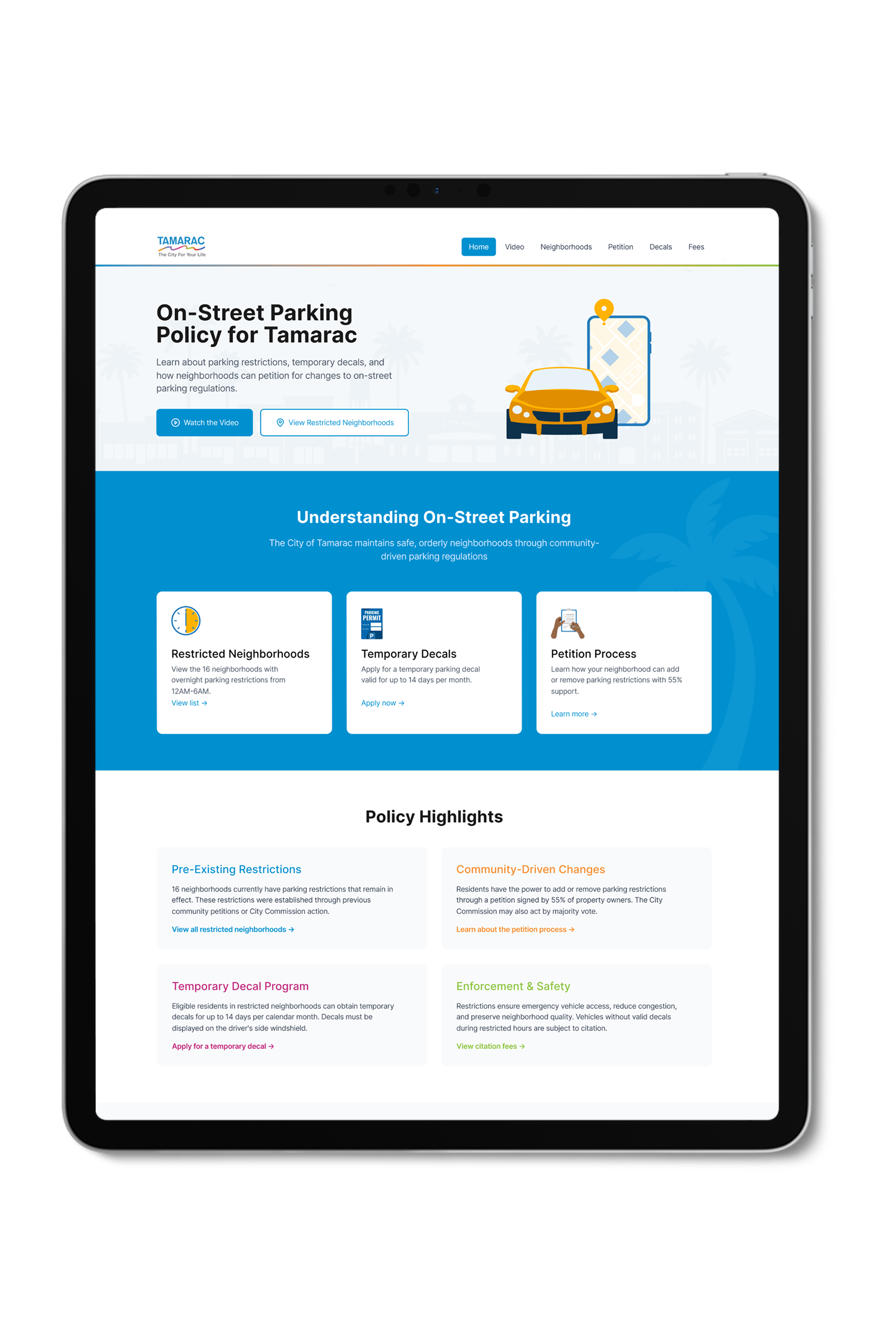
Website
Central resident resource hub
Copywriting
Resident-facing language for campaign materials
Messaging System
Approved language and key points
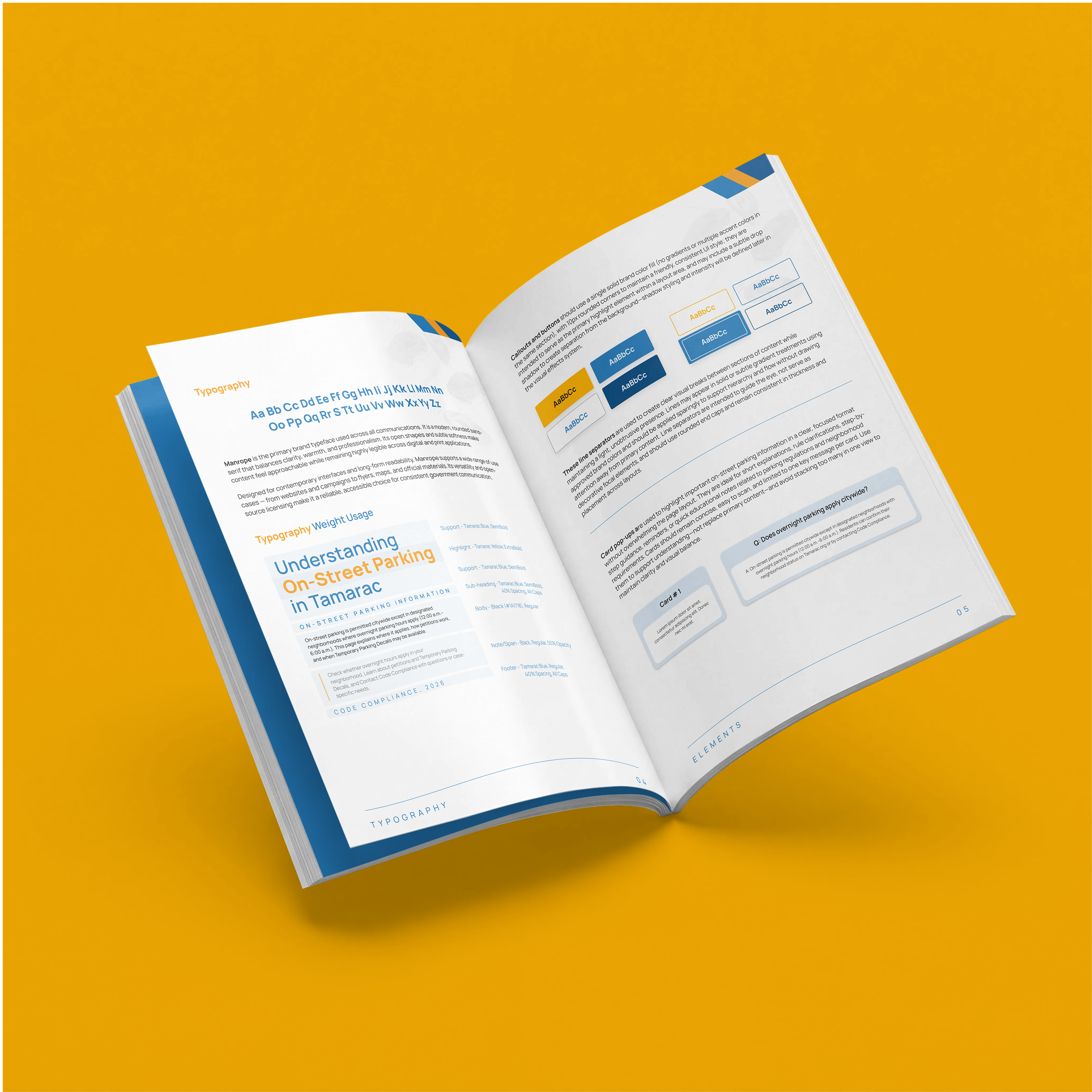
Campaign Branding
Visual system for the rollout
Communication Framework
Rollout structure and messaging hierarchy
Resident Communications
7-Part Email Series
Step-by-step resident guidance
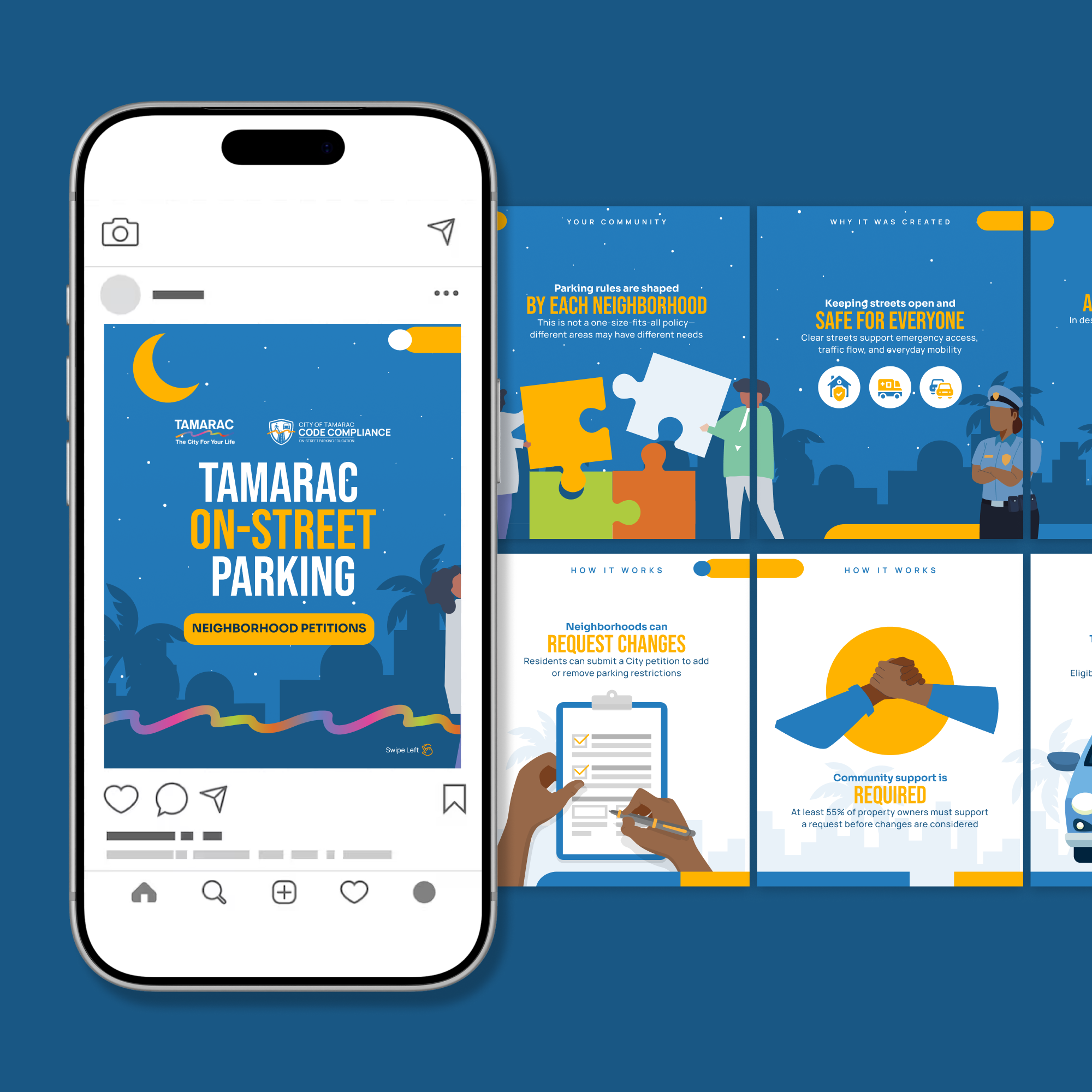
16 Posts and Carousels
Ongoing awareness and education
3 Reels
Short-form video content
Explainer Video
Full overview of the policy
Resident Resources
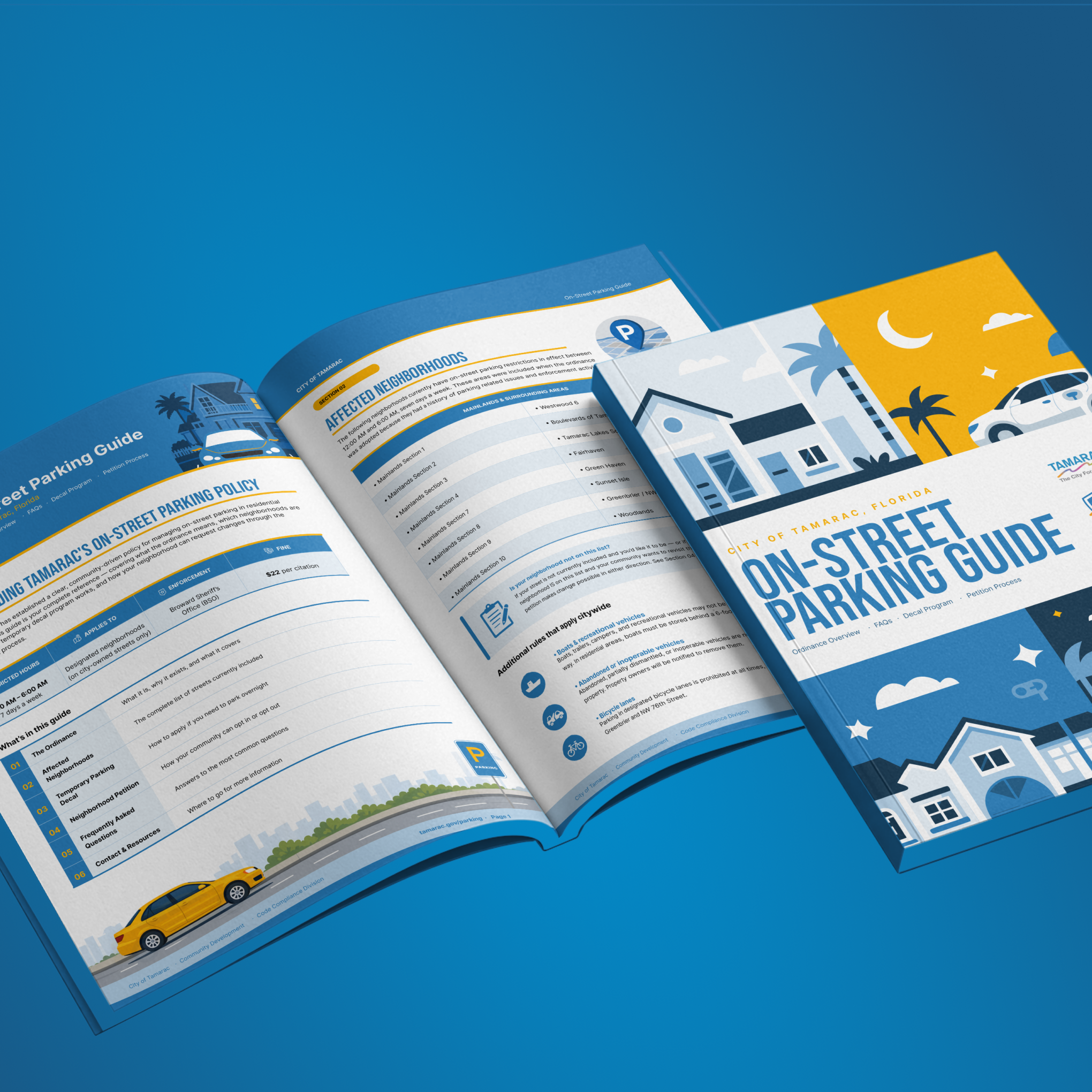
PDF Resource Guide
Detailed resident reference
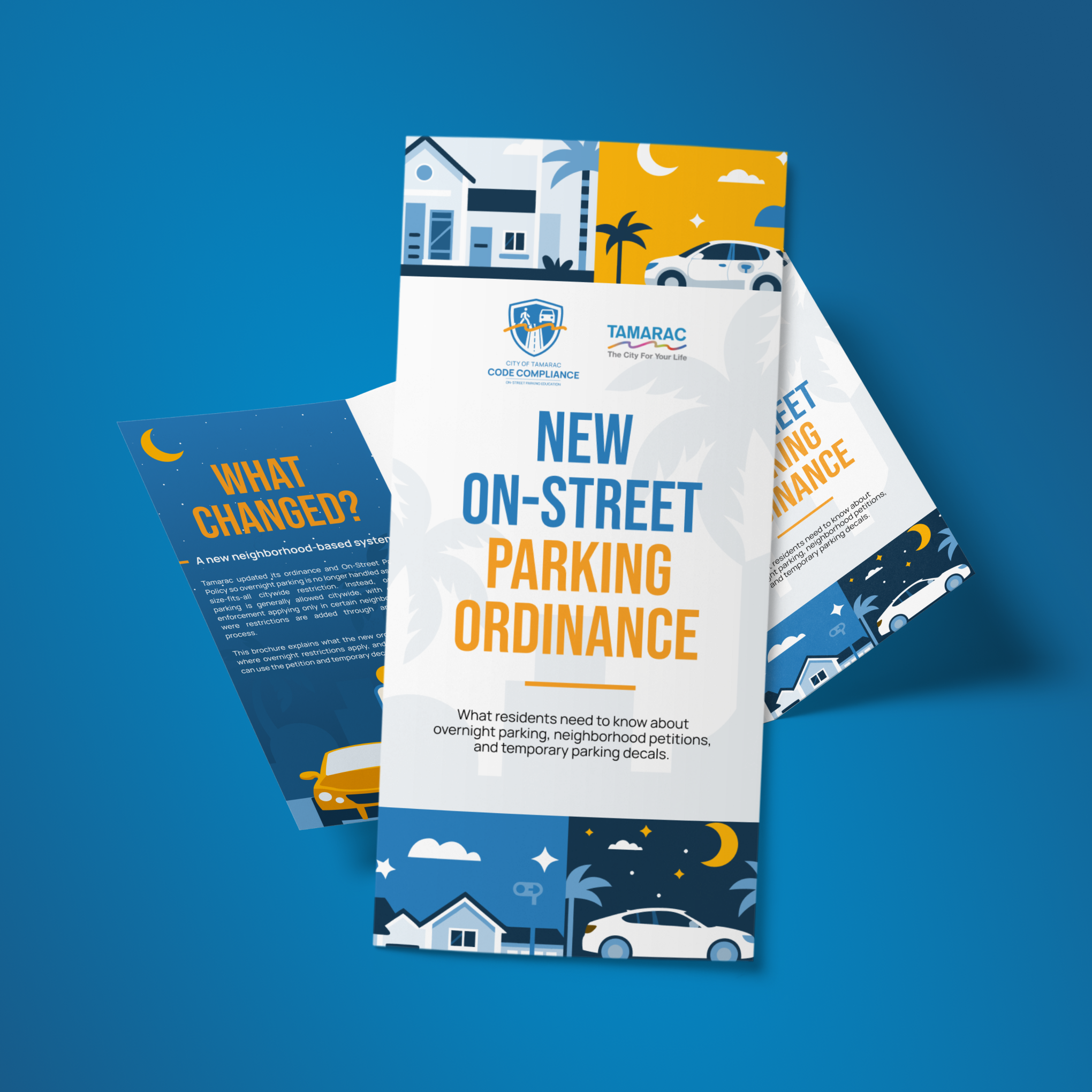
Printed Brochure
In-office and distribution material
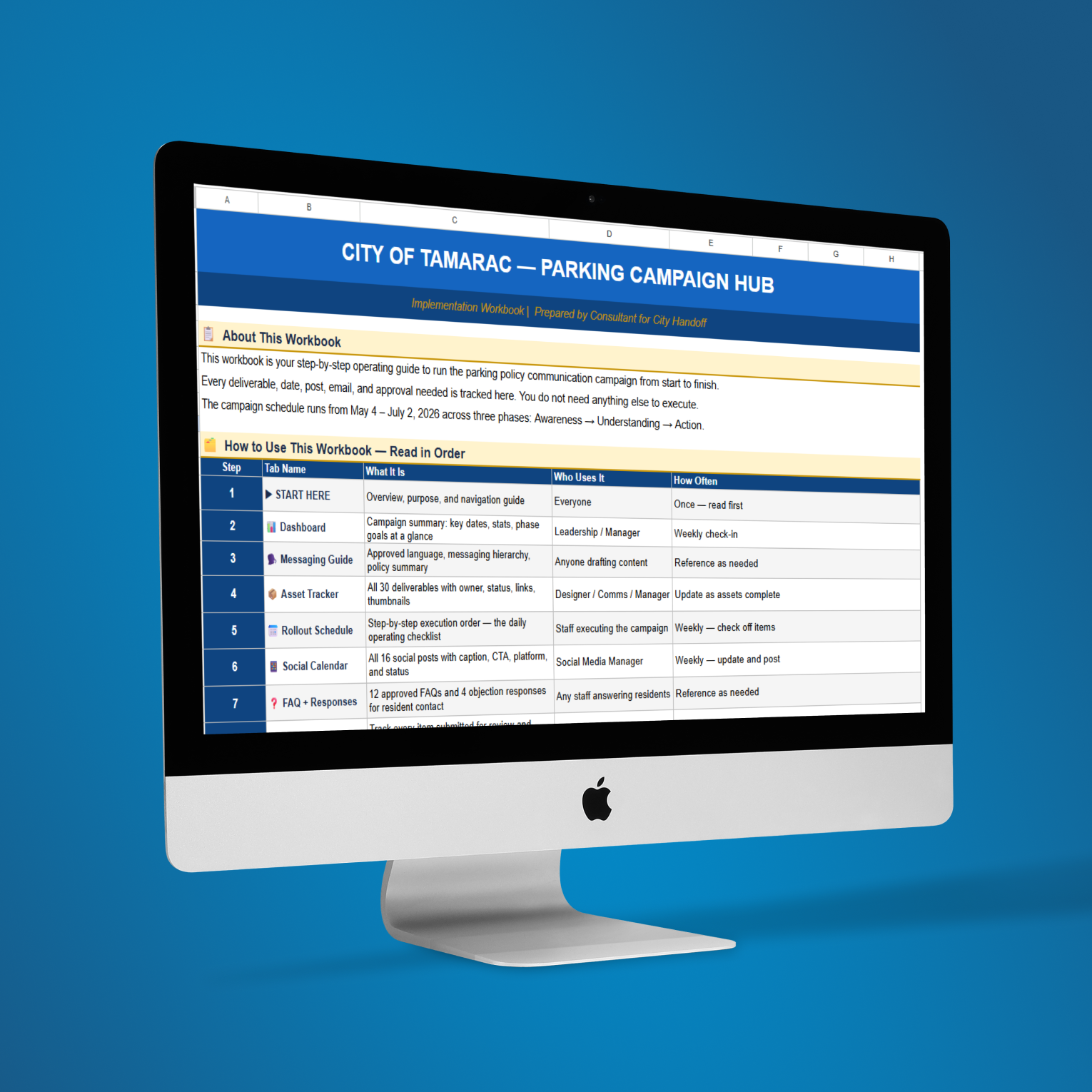
Total: 40+ coordinated assets across web, email, social media, video, print, and internal staff resources.
Policy Context

What changed

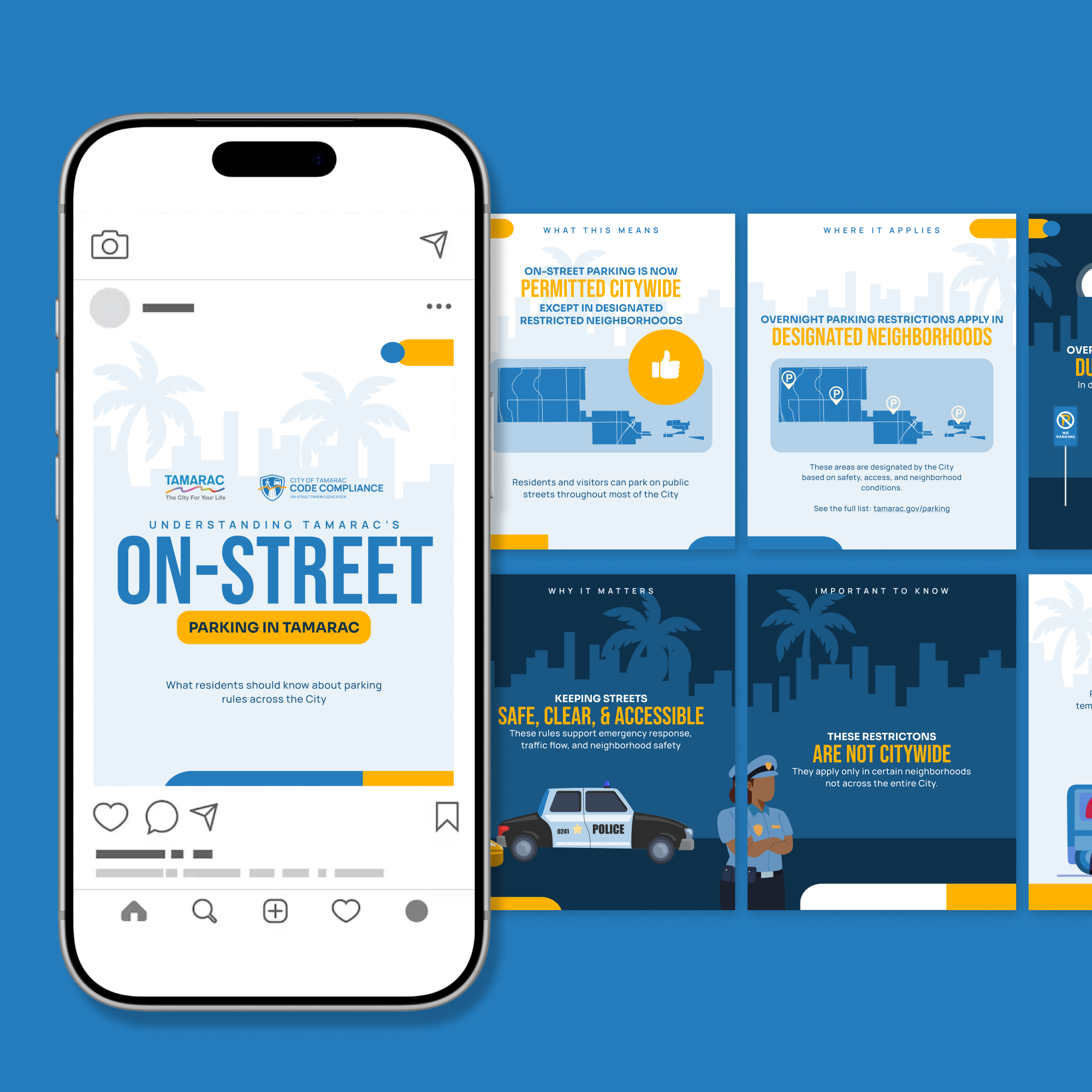
The updated approach moves from a broad citywide restriction to a targeted framework residents can understand and act on.

Before
Blanket overnight parking restriction applied citywide
No clear pathway for neighborhoods to change status
No short-term relief program for temporary overnight needs
Now
Parking generally allowed throughout the city
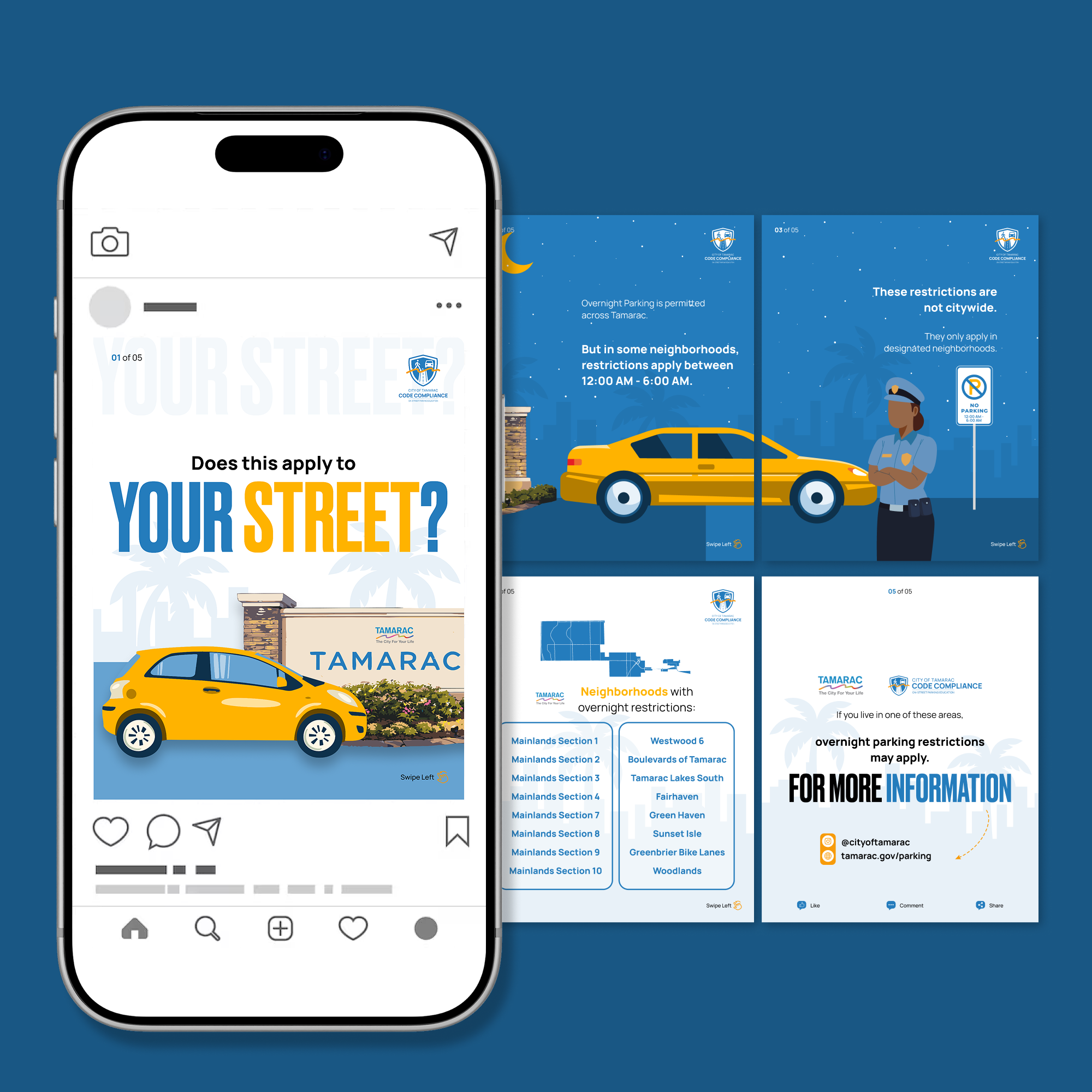
Restrictions apply only in designated neighborhoods, 12 AM – 6 AM
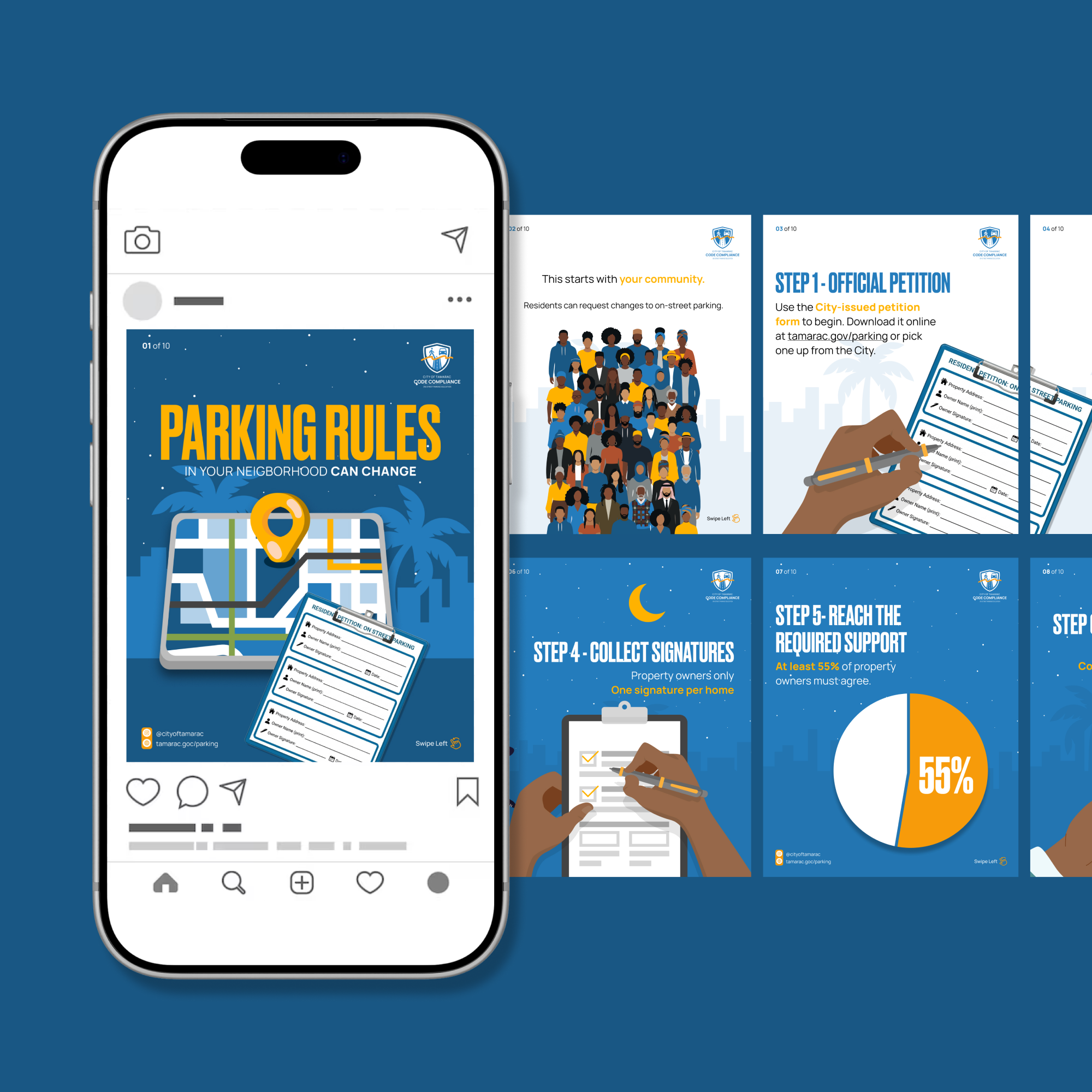
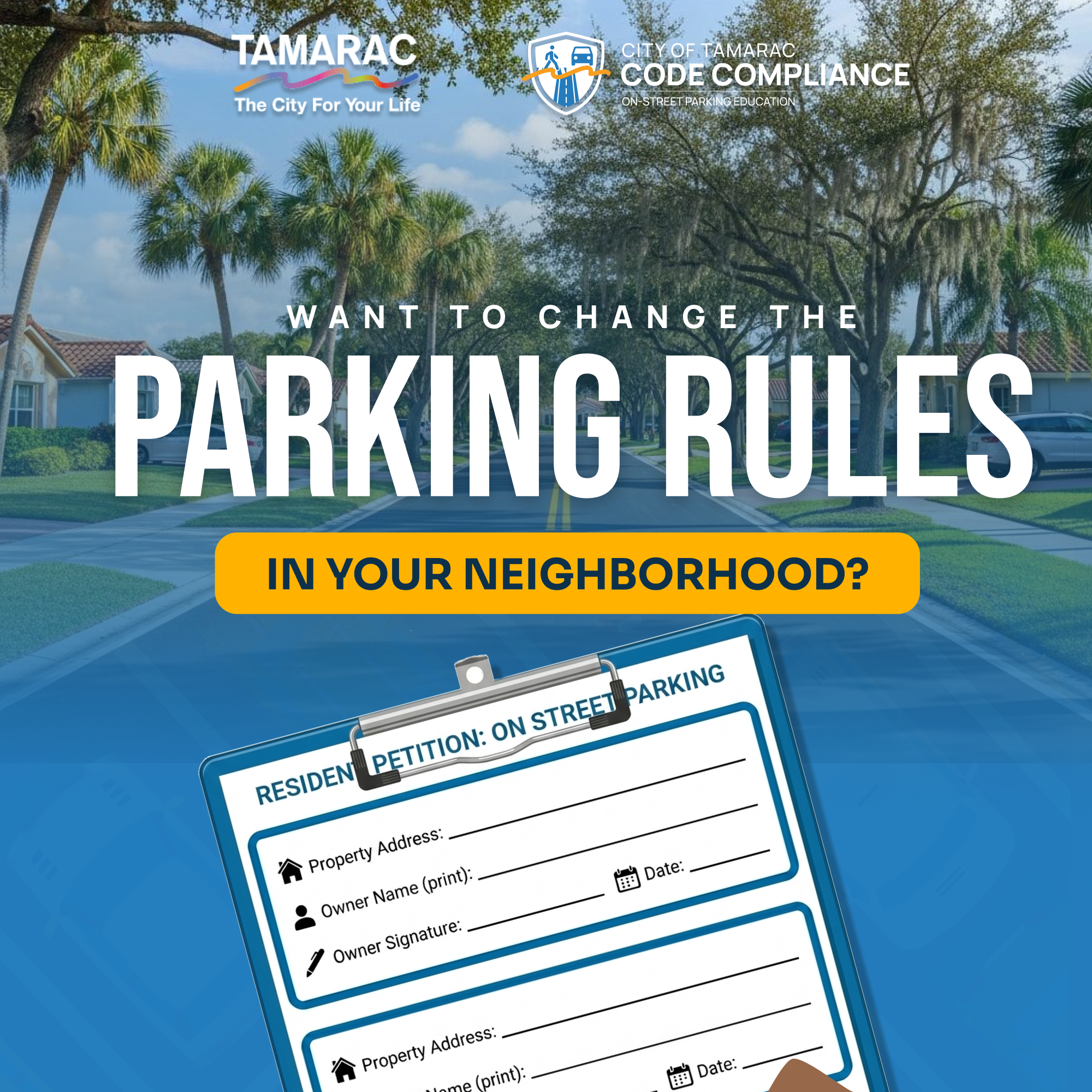
55% petition allows neighborhoods to request a status change
City Commission can adjust enforcement areas
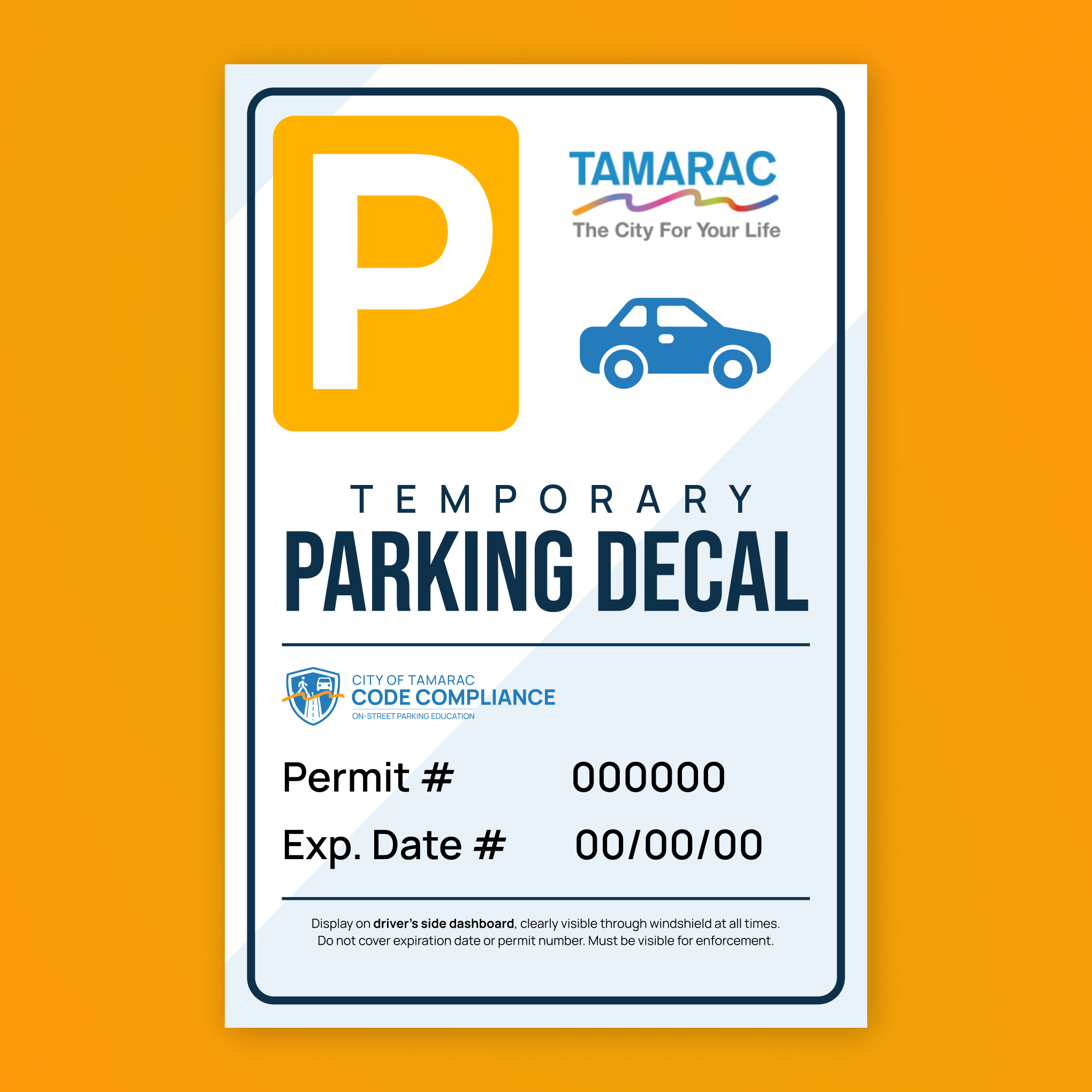
Temporary Parking Decal provides limited short-term relief
Rollout Sequence

Public Education Rollout

Each phase has a specific purpose: introduce the policy, explain how it applies, and guide residents in designated neighborhoods to the correct next step.

Phase 1
Awareness
May 11 – May 31, 2026

Residents know the policy exists, know whether their neighborhood is designated for overnight enforcement, and know where to find answers.

Emails 1–3 · Static posts · Carousel · Reel · Website launch · Resource guide · Explainer video

Phase 2
Understanding
June 1 – June 21, 2026

Residents understand the decal program, petition process, and available options for designated neighborhoods.

Emails 4–5 · Decal explainer · Petition guide · Social content · Reel

Phase 3
Action
June 22 – July 9, 2026

Residents in designated neighborhoods know what to do next and where to go if they still need help.

Emails 6–7 · Action checklist · Final carousel · Campaign close

Centralized Resident Information

Resident Resource Hub

Every email, post, brochure, and video directs residents to one place for current information and downloadable resources.

Paste website screenshot URL into this img src.
Recommended: 1200×1800 JPG/PNG
Screenshot of the Tamarac on-street parking website hub
1
Policy overview
Plain-language explanation of what changed and how the policy applies
2
Enforcement neighborhoods
Full list of designated neighborhoods where overnight restrictions apply
3
FAQs
Approved answers for the questions residents are most likely to ask
4
Temporary decal information
Eligibility, application steps, and program limits
5
Petition process
How residents can request to add or remove restrictions
6
Downloadable forms/resources
Brochure, guide, petition form, and decal application
All campaign channels point here. The website keeps the campaign organized, consistent, and easy for residents to navigate.
Video Education

Explainer Video and Short-Form Video

A short explainer video gives residents a quick, accessible overview of the updated on-street parking policy and directs them to the website hub for next steps.

Paste Vimeo/YouTube embed URL into iframe src.
Example: https://player.vimeo.com/video/123456789

Explains the policy in plain language and directs viewers to tamarac.gov/parking.

Resident Touchpoints

Resident Communications

Email, social, reels, video, and print all reinforce the same message and drive residents back to the website.

Featured social posts
Video reels
Paste reel embed URL into iframe src
Reel · Phase 1
Awareness
What the ordinance means in 30 seconds
Paste reel embed URL into iframe src
Reel · Phase 2
Understanding
How the neighborhood petition process works
Paste reel embed URL into iframe src
Reel · Phase 3
Action
How the temporary parking decal works
Downloadable Resident Guide

Do restrictions apply in your neighborhood?

A downloadable guide gives residents a complete reference for the policy, neighborhood list, decal program, petition process, FAQs, and contact pathway.

On-Street Parking Education
Do restrictions apply in your neighborhood?
Resident Resource Guide · City of Tamarac
VIEW THE PARKING GUIDE
Guide Contents
01What the ordinance covers
02The 16 enforcement neighborhoods
03Enforcement hours and rules
04Temporary Parking Decal program
05Neighborhood petition process
06FAQs and resource links
“Clear, proactive communication reduces confusion, improves compliance, and ensures residents know exactly what is expected.”
Public education goal
Rollout Impact

Expected Benefits

The rollout is designed to reduce confusion, support consistent communication, and help residents understand the updated policy before enforcement becomes the primary interaction point.

Clear answers for residents

Residents know what applies, what does not, and where to find the correct next step.

Consistent messaging

Every channel uses the same approved language and points to the same source of truth.

Fewer inbound questions

The website, FAQ, guide, and social content answer common questions before residents call.

Smoother compliance

Education supports enforcement by giving residents time, context, and options.

Better experience for residents and staff

Residents receive clear, respectful communication, and staff have the materials needed to respond confidently.